
SOC 2 auditor selection is one of the most consequential decisions in your compliance journey — and one of the most underresearched. Most SaaS founders approach the selection process the way they approach software purchasing: they request a few quotes, compare prices, and sign with the lowest bidder. The result is frequently a delayed audit, unexpected scope expansions, and a report that does not satisfy the enterprise buyers they were trying to impress.
This post covers what matters in SOC 2 auditor selection, what the common mistakes are, and how to evaluate a firm before you commit to a 12-to-16-month engagement. If you are still determining whether you need a Type I or Type II audit, start with our guide to SOC 2 Type I vs Type II before selecting your auditor.
Why SOC 2 Auditor Selection Matters More Than Founders Expect
The auditor you select determines more than the price of your audit. They determine the timeline, the depth of evidence review, the findings you receive, and ultimately the quality of the report that your enterprise buyers read.
An experienced SaaS-focused auditor understands the nuances of cloud-based control environments, the common evidence gaps in growing companies, and how to conduct an efficient audit without disrupting your operations. An inexperienced or SaaS-unfamiliar auditor may request evidence in formats your systems cannot produce, misinterpret cloud infrastructure controls, or generate findings that a more experienced reviewer would not have flagged.
The report that results from your audit is the document your buyers will read. The credibility of that document depends in part on the credibility of the firm that issued it. Not all CPA firms have equal recognition among enterprise security teams. The AICPA maintains a directory of licensed CPA firms accredited to perform SOC 2 audits — verify that credential before engaging any firm.
Five Criteria for Evaluating a SOC 2 Auditor
SOC 2 auditor selection should evaluate five dimensions. Applying all five before you sign an engagement letter reduces the risk of audit delays, scope surprises, and a report that does not hold up under enterprise scrutiny.
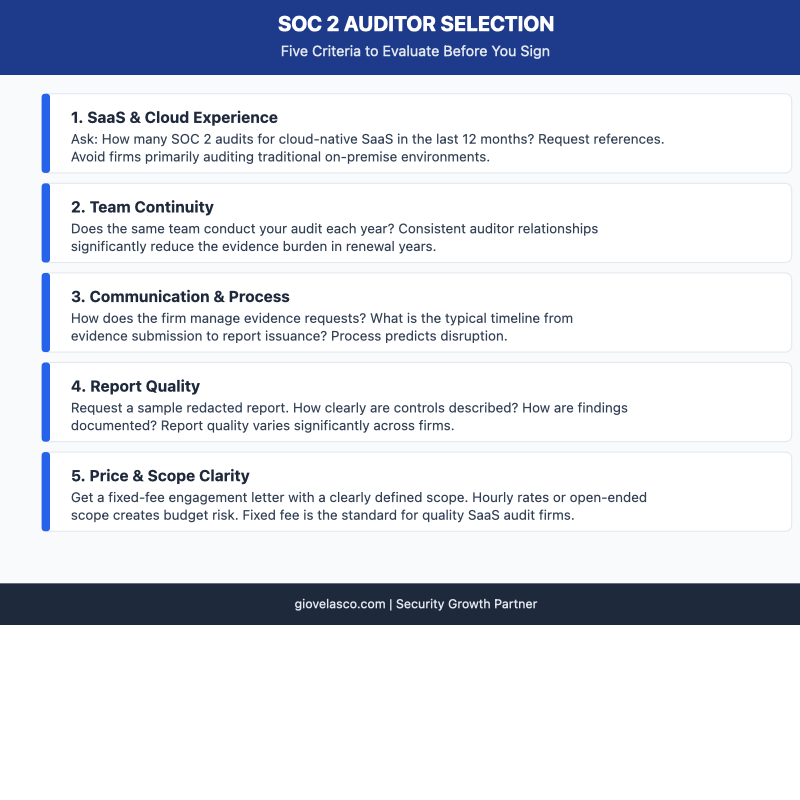
The first is SaaS and cloud experience. Ask specifically how many SOC 2 audits the firm has completed for cloud-native SaaS companies in the last 12 months, and request references from companies at a comparable stage and technical architecture. A firm that primarily audits traditional enterprise IT environments will struggle with your cloud infrastructure.
The second is team continuity. Find out whether the same team conducts your audit each year or whether the engagement is handed to different staff annually. Consistent auditor relationships significantly reduce the evidence collection burden in renewal years.
The third is communication and process. Ask how the firm manages evidence requests — do they use a structured portal, email, or spreadsheet? How do they communicate findings during fieldwork? What is their typical timeline from evidence submission to report issuance? These process questions predict how disruptive the audit will be to your operations.
The fourth is report quality. Request a sample redacted report. The quality of report writing — how clearly controls are described, how findings are documented — varies significantly across firms.
The fifth is price and scope clarity. Get a fixed-fee engagement letter with a clearly defined scope. Auditors who quote hourly rates or who leave scope open-ended create budget risk. A well-defined scope with a fixed fee is the standard for high-quality SaaS-focused audit firms.
SOC 2 Auditor Selection: The Big Four vs Boutique Firms
Enterprise buyers do not require your SOC 2 audit to be conducted by a Big Four firm. What they require is that the firm is a licensed CPA firm accredited to perform SOC 2 audits. You can verify registered public accounting firms through the PCAOB registered firm directory. Boutique firms specializing in SaaS and technology audits frequently outperform larger generalist firms on all five evaluation criteria — particularly on SaaS experience, team continuity, and process efficiency.
The practical advantage of a boutique SaaS-focused firm is meaningful: faster evidence review cycles, more efficient communication, and auditors who understand your infrastructure without requiring extensive education. For companies with limited internal bandwidth to manage the audit process, this efficiency matters as much as the price difference.
When to Start the Auditor Selection Process
Most founders start evaluating auditors too late — after they have already completed readiness preparation and are ready to begin the observation period. The problem with this timeline is that the best SaaS-focused audit firms have long engagement queues, and selecting under time pressure reduces your negotiating position and your evaluation thoroughness.
The right time to begin SOC 2 auditor selection is during your gap assessment — 12 to 18 months before you expect to issue the report. This gives you time to evaluate multiple firms, request references, review sample reports, and negotiate scope and pricing without urgency. For context on what that readiness timeline looks like, see our post on SOC 2 readiness and the enterprise sales cycle.
Starting early also allows you to align your readiness program with your auditor’s evidence format preferences. Some firms have specific preferences for how access review records are documented, how change management is evidenced, or how risk assessments are structured. Building to those preferences from the beginning reduces rework later.
What to Include in Your Auditor Evaluation Request
When you contact audit firms, provide a clear description of your environment to get comparable quotes: the number of employees, the cloud infrastructure you use, the services in scope, and your target audit timeline. Without this information, firms cannot provide accurate fixed-fee quotes.
Ask each firm to provide their standard evidence request list for a SaaS company with your profile. This list tells you more about their process and SaaS experience than any sales conversation will. A firm with a well-structured, cloud-appropriate evidence request list has done this before. A firm whose list references on-premise server room inspection procedures has not.
Finally, ask about their approach to findings. How do they communicate potential findings during fieldwork? Do they allow companies to remediate issues discovered during the audit period before the report is issued? Understanding this process helps you evaluate the risk of unexpected findings affecting your report timeline.
Preparing for SOC 2 and need guidance on auditor selection alongside your readiness program? Book a free 30-minute strategy call at giovelasco.com/contact — we work with SaaS companies through both the readiness and audit phases. You can also begin with our SOC 2 Gap Assessment service to evaluate your current posture before selecting an auditor.
— Giovanni Velasco · CISSP · Security Growth Partner · giovelasco.com